
How to plan Multiple Memory Quilts from One Person's Clothing
May 26, 2026
Memory Quilts · Planning Guide
How to Plan Multiple Memory Quilts from One Person's Clothing
A step-by-step guide to honoring a loved one's wardrobe — and making sure everyone who matters gets a piece of those memories.
When a loved one passes, their clothing holds something irreplaceable — decades of memories stitched into fabric. Turning that wardrobe into memory quilts is one of the most meaningful things a family can do together. But when multiple people want to be part of that tribute, the planning can feel overwhelming before it even begins.
The good news: a typical adult wardrobe contains far more than most families realize. With thoughtful planning, a single person's clothing can yield quilts and pillows for an entire family — each one personal, each one unique. This guide walks you through exactly how to do that, from deciding who receives what to sorting and shipping your items to Project Repat.
Who Should Receive a Memory Quilt?
Before you touch a single shirt, spend a few minutes making a list. Think about the people in your life who were closest to the person you lost — the ones who would wrap themselves in a quilt and feel that person's presence. This list is your starting point for everything that follows.
It's common for families to want quilts for a surviving spouse, each child, and perhaps a parent or close sibling of the deceased. There's no single right answer — only what feels right for your family.
Make Your Initial List of Recipients
Start by writing down every person who might want something — a quilt, a pillow, or even a small keepsake panel. Don't worry about whether you have enough clothing yet. Just get everyone on paper. You can narrow the list once you know how much you're working with. A full adult wardrobe can typically yield enough fabric for five to eight lap-size quilts, or a combination of larger quilts and smaller pillows.
Decide Between Quilts and Pillows
Not everyone on your list needs a full quilt. Pillows require fewer garments and cost less, making them a thoughtful option for extended family members, close friends, or anyone on a tighter budget. A pillow made from a favorite shirt can be just as meaningful as a full quilt — and it means more people can receive something tangible. Consider giving quilts to immediate family and pillows to grandparents, aunts, uncles, or close friends.
Remember to Include Yourself
This one is easy to overlook when you're focused on everyone else. If you're the one coordinating this process — a spouse, a parent, a sibling — it's natural to put your own needs last. But please don't. Set aside a group of items for yourself before you begin distributing clothing to other quilts. Even if you're not ready to place your own order right now, keeping those items separate ensures you'll have them when the time comes.
Real-World Examples
Every family situation is different. Here are a few common scenarios and one way each family might approach dividing up the clothing:
Scenario
A parent has passed away, leaving behind a spouse and two school-age children.
One Possible Approach
Three quilts — one for each child and one for the surviving spouse — plus a pillow for each set of grandparents.
Scenario
A grandparent has passed away with a large extended family: a spouse, four adult children, and several grandchildren.
One Possible Approach
A quilt for the spouse, quilts for each adult child, and a pillow for each grandchild who wants one.
Scenario
A young person has passed away with a smaller wardrobe and many people who loved them.
One Possible Approach
A larger quilt for the parents, smaller quilts or pillows for siblings, and a shared family keepsake pillow for grandparents.
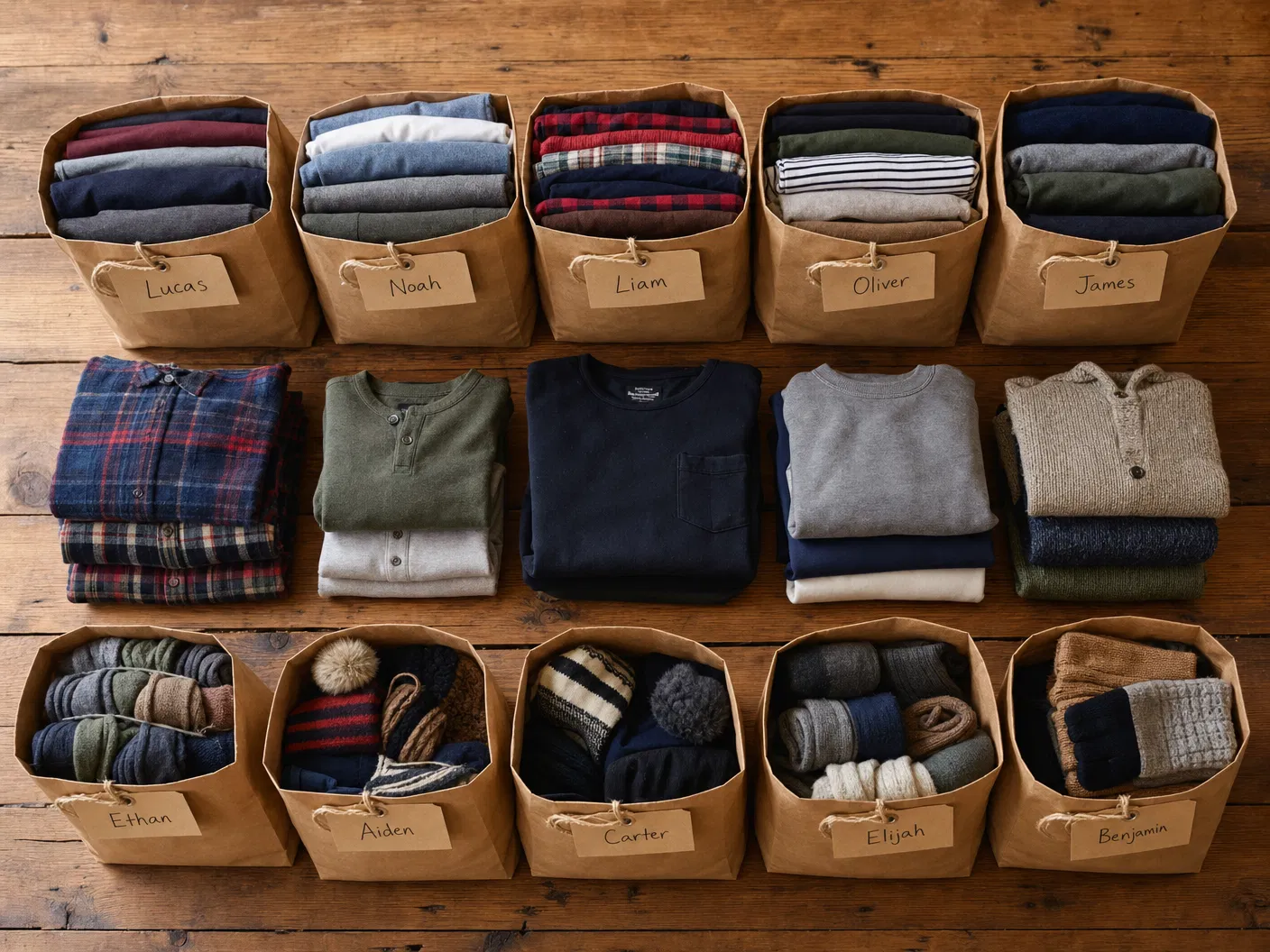
Sorting clothing into labeled bags — one per recipient — makes the entire process manageable.
How to Sort the Clothing for Multiple Quilts
Once you know who is receiving what, it's time to work through the wardrobe itself. Breaking this into clear steps makes the process much less daunting — and helps ensure that every quilt ends up with the right pieces.
Take Stock of What You Have
Lay everything out or count what's in the closet and drawers. This gives you a realistic picture of how many quilts and pillows are possible. As a general guide:
- A lap-size quilt typically uses 8–20 shirts or garments
- A larger throw or queen quilt may use 20–30+ items
- A pillow generally needs 4–8 items
- One garment can contribute panels to multiple quilts if cut carefully
Keep in mind that Project Repat can cut multiple panels from a single garment, so one well-loved flannel shirt might appear in three different quilts.
Set Up a Labeled Bag or Box for Each Recipient
Get a bag, bin, or box for every quilt and pillow on your list. Label each one with the recipient's name. As you go through the wardrobe, you'll place each item — or note which items should be shared — into the appropriate container. This physical separation makes the sorting process concrete and prevents confusion later. Include a slip of paper inside each bag listing any special notes, such as which side of a shirt to feature or whether a photo should be included.
Assign Items Thoughtfully
Think about what each person remembers most. Did one child always associate their parent with a particular team jersey? Did a sibling share a special memory tied to a specific vacation shirt? Start by placing each person's most meaningful item in their bag first, then fill in around it. This approach ensures the most important pieces end up in the right quilts — and makes the remaining sorting feel more straightforward.
Review Each Grouping for Color and Cohesion
Once you've done an initial sort, open each bag and lay the items out side by side. Step back and look at the overall palette. Does the combination feel cohesive? Are there any items that clash badly with the rest of the group? It's fine to shuffle pieces between bags at this stage — the goal is for each quilt to have a visual identity that feels intentional, not random.
Handle Items That Belong in Multiple Quilts
Some garments are so central to a person's identity that every family member wants a piece of them. That's completely workable. Create a separate "shared items" pile and use a piece of painter's tape on each garment to note which quilts should receive a panel from it. When you ship to Project Repat, include a note explaining which items are shared and which quilts each shared item should appear in. Our team will cut and distribute those panels accordingly.
Each quilt tells its own story — even when they all come from the same wardrobe.
Made in North Carolina · Since 2012
Ready to Turn Those Memories into Something Lasting?
Project Repat has helped over one million families preserve their most meaningful clothing. Our team is here to guide you through every step.
Order Your QuiltQuestions? Visit our FAQ & Contact page.